

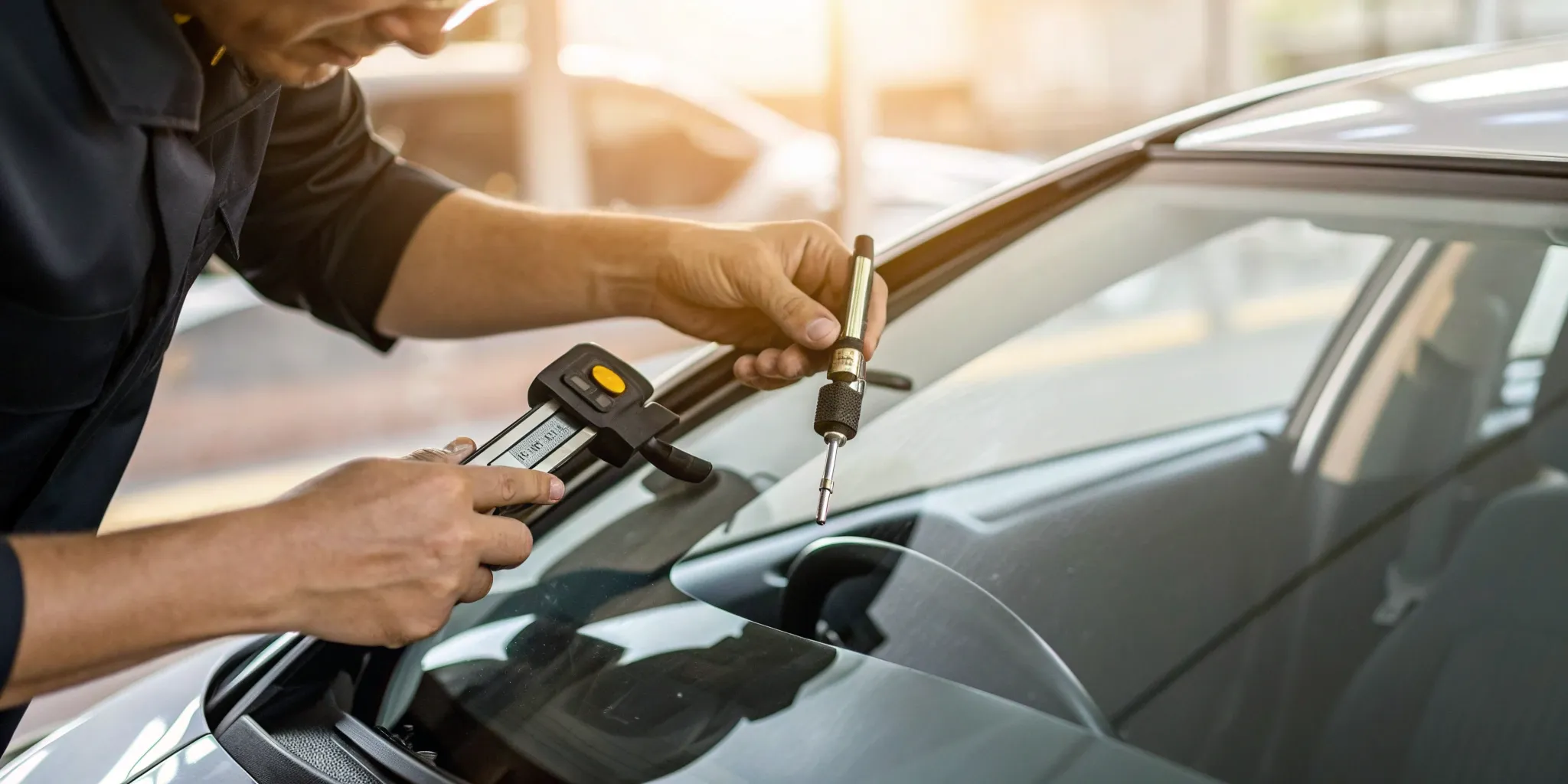
You probably chose your Toyota in part for its incredible safety features, like the pre-collision system and lane departure alerts. What you might not realize is that these systems see the world through a camera mounted directly on your windshield. When that glass is replaced, the camera’s view is altered, even if only by a millimeter. Without a proper recalibration, your car’s most important safety features can become unreliable or fail completely. This article explains the entire process, from the technology involved to the average toyota windshield calibration cost, ensuring your car continues to protect you exactly as it was designed to.
Key Takeaways
- Your Safety Features Depend on It: After a windshield replacement, calibration is mandatory to ensure your lane departure alerts and pre-collision system work correctly. Skipping it means your car’s most important safety technology can’t be trusted when you need it most.
- Vet Your Technician and Ask for Proof: Not all shops have the right tools or training for this specialized job. Ask if their technicians are certified in ADAS calibration and always get a certificate of completion for your records and insurance purposes.
- Check Your Insurance Coverage: The cost of calibration is often covered by comprehensive auto insurance as part of a windshield claim. A quick call to your agent can confirm your coverage and save you from unexpected out-of-pocket expenses.
What is Toyota Windshield Calibration?
If you drive a newer Toyota, you might have heard the term “windshield calibration” thrown around, especially when discussing a replacement. So, what exactly is it? Simply put, calibration is the process of precisely realigning the cameras and sensors that are part of your car’s advanced safety systems. After a new windshield is installed, these components need to be reset to their exact original specifications to ensure they function correctly.
Think of it like adjusting the focus on a camera. If the lens is even slightly off, the picture will be blurry. Similarly, if your Toyota’s safety camera is misaligned by just a single degree, it can’t accurately “see” the road, other cars, or lane markings. This process is essential for modern vehicles, and a professional windshield recalibration ensures your safety features are working exactly as they should. It’s not an optional tune-up; it’s a critical step in keeping you safe on the road.
A Quick Look at Your Car’s ADAS
Many modern Toyotas come equipped with a suite of safety features called Toyota Safety Sense, which is a type of Advanced Driver-Assistance System (ADAS). These systems are designed to help prevent accidents and include features like Lane Departure Alert, a Pre-Collision System, and Adaptive Cruise Control. The “eyes” of your ADAS are a forward-facing camera and various sensors, which are typically mounted on the inside of your windshield, near the rearview mirror. These components constantly monitor the road ahead, and calibration ensures they are aimed perfectly.
Why Proper Calibration is Non-Negotiable
Skipping calibration after a windshield replacement is a serious gamble. Even if your safety features seem to be working, a tiny misalignment can have big consequences. A camera that’s off by just one or two degrees might misjudge the distance of the car in front of you or fail to detect lane markings accurately. This could cause your automatic emergency braking to engage too late—or not at all. To protect yourself and your passengers, proper calibration by a trained technician is non-negotiable. It ensures that the safety systems your Toyota was built with are ready to perform when you need them most.
Static vs. Dynamic: The Two Types of Calibration
There are two primary methods technicians use to calibrate your vehicle’s ADAS: static and dynamic. Static calibration is performed in a controlled workshop environment. A technician places a specific target board in front of your vehicle and uses specialized equipment to align the camera to it. Dynamic calibration, on the other hand, requires the technician to drive the car at a certain speed on well-marked roads, allowing the system to calibrate itself as it moves. Some vehicles require one method, while others need a combination of both. A qualified shop will know exactly which procedure your Toyota needs.
How Much Does Toyota Windshield Calibration Cost?
When you get a quote for a windshield replacement, the cost of calibration might come as a surprise. It’s a separate, essential service that ensures your car’s safety features work correctly. Understanding the factors that go into the price will help you know what to expect and make an informed decision for your Toyota.
What’s the Average Price?
So, what’s the bottom line? Generally, you can expect a Toyota windshield calibration to cost anywhere from $300 to over $600. This price can fluctuate quite a bit, and it’s important to know that dealerships often charge a premium, with costs sometimes reaching $1,200 or more. While it might seem like just another expense, think of it as an investment in your safety. Proper calibration ensures that the advanced driver-assistance systems (ADAS) your car relies on are functioning exactly as they should, protecting you and your passengers on the road.
Dealership vs. Independent Shop: What’s the Difference?
You have two main options for calibration: the dealership or a certified independent auto glass shop. Dealerships typically have higher rates, partly due to their overhead costs. However, a reputable independent shop can provide the same high-quality service, often at a more competitive price. Technicians at specialized shops perform windshield recalibration every day, using the same professional-grade equipment and following manufacturer specifications. Choosing a trusted local expert like Winaffix means you get dealership-level quality without the dealership price tag, plus the convenience of mobile service.
Will Your Insurance Cover It?
This is a great question, and the answer is often yes. If you have a full-coverage or comprehensive auto insurance policy, the cost of windshield calibration is typically covered as part of a windshield replacement claim. Since calibration is a required step to restore your vehicle’s safety systems to their original condition, most insurers recognize it as a necessary expense. The best first step is to review your policy or give your insurance agent a call. We can also help you understand your coverage and manage the paperwork for your auto glass claims.
How Location Affects the Price
Just like with many other services, where you live can influence the final cost of your windshield calibration. Prices can vary from one city or state to another, largely due to differences in regional labor rates and the cost of doing business. For example, you might find that service costs are higher in a major metropolitan area compared to a smaller town. A trustworthy service provider will always be transparent about their pricing and give you a detailed quote upfront, so you know exactly what to expect before any work begins.
Other Factors That Influence the Final Bill
The final price tag isn’t just about labor; it also depends on your specific Toyota model. Newer vehicles, especially those packed with the latest technology, often have more complex ADAS features that require a more intensive calibration process. Systems like lane departure warnings, adaptive cruise control, and pre-collision systems are all tied to cameras mounted on your windshield. The more sensors and features your car has, the more intricate the calibration becomes. This is why it’s so important to have the work done by a qualified technician who understands the specific needs of your vehicle’s advanced services.
Which Toyota Safety Systems Need Calibration?
If you drive a newer Toyota, you’re probably familiar with Toyota Safety Sense, a suite of features designed to keep you safe on the road. What you might not know is that many of these systems rely on a camera mounted directly on your windshield. When you get a windshield replacement, that camera’s position can shift ever so slightly—we’re talking millimeters. While it might seem minor, even a one-degree change can cause a safety system to misinterpret the road ahead, putting you at risk. That’s why a professional windshield recalibration is not just a recommendation; it’s a critical part of the replacement process. Let’s look at the specific systems that need this expert attention.
Lane Departure Warning
Your Lane Departure Warning system uses the windshield camera to identify lane markings on the road. If you start to drift without signaling, it alerts you. After a windshield replacement, if the camera isn’t perfectly aligned, it might not “see” the lines correctly. This could mean it fails to warn you when you’re drifting, or it might give you false alerts when you’re perfectly centered in your lane. Proper calibration ensures the camera is looking exactly where it should be, so this feature can reliably do its job and help prevent you from unintentionally leaving your lane.
Forward Collision Prevention
This is a big one. Your car’s forward collision prevention system uses the camera to judge the distance and speed of objects in front of you, like other cars or pedestrians. It’s designed to warn you of a potential crash and even apply the brakes automatically. If the camera is tilted by just a degree or two after a new windshield is installed, it can completely throw off its depth perception. It might think an object is much farther away—or closer—than it actually is. This could delay the warning or cause the system to brake too late, which is why recalibrating it is essential for your peace of mind.
Adaptive Cruise Control
Adaptive Cruise Control is a fantastic feature for highway driving, automatically adjusting your speed to maintain a set distance from the vehicle ahead. Like the forward collision system, it depends on the windshield camera to accurately track the car in front of you. A misaligned camera can lead to erratic behavior, like maintaining an unsafe following distance or braking unnecessarily. To ensure your cruise control operates smoothly and safely, recalibration is a must. It syncs the camera with the system’s software, so it can correctly interpret what’s happening on the road.
Road Sign Assist
Ever notice how your Toyota displays the current speed limit on your dashboard? That’s the Road Sign Assist feature at work. The forward-facing camera reads road signs, including speed limits, stop signs, and do not enter signs, and shows them to you. If the camera isn’t calibrated correctly, it might misread signs or fail to see them altogether. This could lead to you unknowingly exceeding the speed limit or missing a critical warning. A quick calibration ensures the camera is properly focused to keep you informed and aware of local traffic laws.
Automatic High Beams
Your automatic high beams make night driving much easier by detecting the headlights and taillights of other vehicles, then switching between high and low beams for you. This prevents you from dazzling other drivers while maximizing your own visibility. The system’s “eyes” are the camera on your windshield. If it’s not aimed correctly, it might not detect an oncoming car, leaving your high beams on and potentially blinding the other driver. Recalibration ensures the camera is sensitive and accurate, making nighttime roads safer for everyone.
Pre-Collision System
Toyota’s Pre-Collision System is the central hub for many of these safety features, designed to detect and help you avoid frontal collisions. Toyota is very clear in its service guidelines: anytime the windshield is replaced, the camera for this system must be recalibrated. There’s no gray area here. Experts who specialize in these advanced systems agree that skipping this step is a major safety risk. To ensure this foundational safety feature is fully operational and ready to protect you and your passengers, a professional calibration is non-negotiable.
When Do You Need to Calibrate Your Windshield?
Knowing when your Toyota needs a windshield calibration isn’t always obvious, but it’s one of the most important things you can do for your safety. Your car’s advanced driver-assistance systems (ADAS) rely on a perfectly positioned camera to see the road. If that camera’s view is even slightly off, the systems that keep you safe can’t do their job properly. Think of it like trying to walk straight while wearing glasses that are crooked—it just doesn’t work. Here are the key times you absolutely need to schedule a windshield recalibration.
After a Full Windshield Replacement
This is the most critical time for a calibration. Any time you get a full windshield replacement, recalibration is not just recommended—it’s essential. The camera for your ADAS is mounted directly onto the windshield. When a technician installs a new piece of glass, the camera’s position will inevitably shift, even if it’s by less than a millimeter. That tiny difference is enough to throw off the entire system’s calculations, affecting its ability to accurately detect lane lines, other vehicles, and potential hazards. Without a proper calibration, your safety features simply won’t be reliable.
Following Even Minor Repairs
While not all minor repairs demand a calibration, certain situations do. If you have windshield chip repairs done and the damage is not in the camera’s direct line of sight, you might be in the clear. However, if the repair process requires the technician to remove or adjust the windshield or the camera mount itself, a calibration is necessary. Even a tilt of one or two degrees can cause the system to misinterpret distances, seeing things as either too close or too far away. It’s always best to ask your technician if the repair could have affected the camera’s alignment.
Warning Signs Your Calibration is Off
Sometimes, your car will tell you when something is wrong. If your ADAS calibration is off, you might notice a few clear warning signs. The most common is a warning light appearing on your dashboard, often indicating an issue with the pre-collision system or lane departure alert. You might also notice your safety features behaving erratically. For example, your lane-keeping assist might not engage, or worse, your automatic emergency braking could trigger at the wrong time, like when going under an overpass. If you notice any of these issues, get your calibration checked immediately.
What Toyota Recommends
When it comes to safety, it’s always best to follow the manufacturer’s guidelines. Toyota officially states that the camera systems connected to the windshield must be recalibrated after a replacement. This isn’t just a suggestion; it’s a required procedure to ensure the Toyota Safety Sense suite functions as designed. These systems are finely tuned, and the manufacturer has determined that a new piece of glass changes the equation enough to require a full system reset and recalibration. Skipping this step goes against expert advice and the official recommendations from the people who built your car.
How to Find a Qualified Calibration Service
Once your windshield is replaced, finding the right professional to handle the calibration is just as important as the replacement itself. Your Toyota’s safety features depend on it. You wouldn’t trust just anyone with your car’s brakes, and the same logic applies here. The ADAS is a complex system that requires a specialist’s touch to function correctly. Choosing a qualified technician ensures your lane departure warnings and pre-collision systems are working to protect you and your passengers on the road.
So, how do you sort through the options and find a service you can trust? It comes down to looking for a few key indicators of quality and expertise. A little homework upfront can save you from major headaches later. You’ll want to find a shop that not only has the right tools but also technicians with specific training in ADAS technology. At Winaffix, we specialize in providing expert windshield recalibration to ensure your safety systems are restored to factory standards.
Look for the Right Certifications
When you’re searching for a calibration service, start by looking for proof of expertise. Technicians who work on ADAS should have specific certifications from industry organizations. This isn’t a job for a general mechanic; it requires specialized training to understand the precise requirements of your Toyota’s safety systems. Don’t hesitate to ask a shop if their technicians are certified in ADAS calibration. Reputable providers will be proud to share their qualifications. This ensures the person working on your vehicle has the proven knowledge to do the job right the first time.
Check for Professional-Grade Equipment
Proper calibration requires highly specific, professional-grade equipment. For static calibration, this includes a specialized bay with precise targets and patterns that the car’s cameras and sensors read. For dynamic calibration, technicians use a handheld device that plugs into your car’s computer while they drive a specific route. A qualified shop will have invested in this technology and will be transparent about their process. If a provider is vague about their tools or can’t explain how they perform the calibration, consider it a red flag.
Questions You Should Ask Your Technician
Before you commit to a service, arm yourself with a few questions to vet the provider. This helps you gauge their experience and professionalism.
Here are a few things you should ask:
- Do you have experience calibrating my specific Toyota model?
- What type of calibration (static, dynamic, or both) does my vehicle require?
- Can you explain the calibration process to me?
- Will I receive a certificate or proof of calibration when the service is complete?
A knowledgeable technician will be able to answer these questions confidently and clearly. Their responses will give you peace of mind that your vehicle is in capable hands.
How to Confirm the Job Was Done Right
After the calibration is finished, you should always receive documentation confirming the service was completed successfully. This is often called a certificate of calibration. This document is your proof that the ADAS was restored to OEM specifications. It’s not just for your records—many insurance companies require this proof as part of a windshield replacement claim. A professional service will provide this automatically. If they don’t, be sure to ask for it before you drive away. This final step ensures accountability and confirms your safety systems are ready for the road.
Common Myths About Windshield Calibration
When it comes to windshield calibration, there’s a lot of confusing information out there. It’s easy to get bogged down by myths and half-truths, especially when you’re just trying to get your car back on the road safely. Let’s clear the air and tackle some of the most common misconceptions about ADAS calibration so you can make an informed decision for your vehicle.
Can You Calibrate It Yourself?
With so many DIY tutorials available for car maintenance, it’s natural to wonder if you can handle windshield calibration on your own. The short answer is no. This isn’t like changing your oil or replacing a headlight. Windshield recalibration requires highly specialized, professional-grade equipment to precisely align the cameras and sensors in your ADAS. These tools are expensive and require specific training to operate correctly. Even a millimeter of misalignment can cause your safety systems to fail. For a job this critical to your safety, it’s always best to trust a certified technician who has the right tools and expertise.
The Dangers of Skipping Calibration
Thinking about skipping calibration to save a few bucks? It’s a risky gamble that could have serious consequences. After a windshield replacement, the camera mounted on your windshield has been moved. Even if it seems to be working, it might not be reading the road correctly. A misaligned camera could fail to detect a pedestrian, misjudge the distance of the car in front of you, or even cause your car to brake suddenly for no reason. Your car’s safety features are there to protect you, but they can only do their job if they are perfectly calibrated. Skipping this step essentially turns your advanced safety systems off, or worse, makes them unreliable.
How Long Does It Really Take?
Another common myth is that calibration is a long, drawn-out process that will leave you without your car for a full day. In reality, the calibration itself is surprisingly quick. For most vehicles, a static or dynamic calibration can be completed in about 30 to 45 minutes. At Winaffix, we integrate this process seamlessly into our replacement service to get you back on the road as quickly and safely as possible. It’s a small investment of time that provides a massive return in safety and peace of mind. Don’t let the fear of a lengthy appointment keep you from completing this essential service.
The Truth About Insurance Coverage
Many drivers worry that calibration will be a significant out-of-pocket expense. The good news is that most major insurance providers recognize that calibration is a mandatory part of a proper windshield replacement. If your policy includes comprehensive coverage for auto glass, the cost of recalibration is almost always included. We can help you navigate the paperwork and work with your insurance provider to ensure the service is covered. In many cases, you’ll have little to no deductible, and since it’s part of a comprehensive claim, it typically won’t affect your insurance rates.
After the Calibration: What’s Next?
Once your Toyota’s new windshield is in and the ADAS has been calibrated, you’re almost ready to hit the road with confidence. But before you drive off, there are a few final things to keep in mind. Think of this as the final checkpoint to ensure your vehicle’s safety systems are fully protected and ready to protect you. Taking a few extra moments to understand your warranty, maintenance, and paperwork will give you complete peace of mind and ensure the long-term value of the service you just received. Proper follow-up is just as important as the windshield recalibration itself, making sure every component works together seamlessly for years to come.
What to Know About Your Warranty
Your vehicle’s warranty is a valuable asset, and you want to make sure you don’t accidentally void it. After a windshield replacement, failing to get a proper calibration can be a major issue. Some manufacturers, including Toyota, may not cover future problems with your safety systems if they can’t confirm they were correctly calibrated after service. This could leave you responsible for expensive repairs down the line. More importantly, if an accident were to occur because a safety feature failed to engage, not having proof of calibration could create serious legal and liability issues. It’s a simple step that protects both your car and your finances.
Tips to Keep Your ADAS Working Properly
Your car’s Advanced Driver-Assistance Systems (ADAS) rely on a clear, unobstructed view to function correctly. Now that your system is perfectly calibrated, a little maintenance goes a long way. The easiest tip is to keep your windshield clean, especially the area around the rearview mirror where the cameras and sensors are housed. Wiping this area down regularly prevents dirt, dust, or smudges from interfering with the system’s “eyes.” Also, pay attention to your dashboard. If you see any new warning lights related to your safety features, it’s a sign that something might be off. Being proactive helps ensure the services you invested in continue to work flawlessly.
Always Get Proof of Calibration
Never leave a service appointment without documentation. A reputable auto glass shop will provide you with a certificate or a detailed receipt confirming that a successful calibration was performed. This piece of paper is more than just a record—it’s your proof. Insurance companies often require this documentation when processing auto glass claims, as they want to ensure the vehicle has been restored to its original safety standards. Keep this certificate with your other important vehicle records. It’s essential for your own peace of mind and can be incredibly helpful if you ever sell the car or need to prove the work was done correctly.
The Long-Term Value of Your Safety
At the end of the day, windshield calibration is about one thing: your safety. It’s not just a technical requirement; it’s what ensures your Toyota’s advanced features—like the pre-collision system, lane departure alerts, and adaptive cruise control—are ready to act when you need them most. Skipping this step means those systems might not work correctly, putting you, your passengers, and others on the road at risk. Think of calibration as a small investment that pays huge dividends in safety and confidence every time you get behind the wheel. It’s a commitment to ensuring your vehicle performs exactly as its engineers intended.
Related Articles
- Best #1 Windshield Recalibration | Winaffix Auto Glass
- How Much to Replace a Windshield? A 2025 Guide
- How Much Does a Windshield Replacement Cost?
- Get a Quote for Windshield Replacement: A Simple Guide
- Mobile Windshield Replacement: A Complete Guide
Frequently Asked Questions
Do I really need calibration if my safety features seem to be working fine after a windshield replacement? This is a great question, and the answer is a definite yes. Even if you don’t see a warning light on your dashboard, the camera’s alignment could be off by a tiny, imperceptible amount. This small shift is enough to make your safety systems unreliable. They might fail to engage in a critical moment or react incorrectly, which is why professionals and Toyota itself consider calibration a mandatory step to ensure your car is truly safe to drive.
Why is calibration a separate, sometimes expensive, charge? Is it just an upsell? It’s definitely not an upsell. Windshield calibration is a distinct and highly technical service that requires specialized equipment and trained technicians. The cost covers the use of this professional-grade technology and the technician’s expertise to precisely realign your car’s safety systems to manufacturer standards. Think of it as a separate, essential procedure that restores your car’s safety features, rather than just a part of the glass installation itself.
Will a small chip repair require a full recalibration? Generally, if a small chip is repaired and it’s not in the camera’s direct line of sight, you likely won’t need a recalibration. However, if the repair process involves removing or adjusting the windshield in any way, or if the damage is close to the camera mount, a calibration becomes necessary. The best approach is to have a professional technician assess the situation, as they can determine if the camera’s alignment could have been affected.
How can I be sure the technician did the calibration correctly? A reputable service provider will always give you proof that the job was done right. After the service is complete, you should receive a certificate or a detailed report confirming that the calibration was successful and your vehicle’s systems are back to factory specifications. This documentation is your assurance of a job well done and is often required by insurance companies, so don’t hesitate to ask for it.
Is it better to go to the Toyota dealership for calibration? While a dealership can certainly perform the calibration, it’s not your only option. A certified, independent auto glass shop with the right equipment and trained technicians can provide the exact same quality of service, often at a more competitive price. These specialized shops perform calibrations every day. The most important factor is choosing a provider with proven expertise and the proper tools, not necessarily where they are located.
